Thursday, April 4, 2013

The App Economy Is In Rude Health, Says Flurry, But Mobile Browsers Are Being Squeezed By Facebook

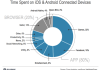
Flurry AnalyticsApp analytics company Flurry has taken a look at how U.S. consumers are splitting their time between mobile apps and browsers. The company found the iOS and Android app economy is in rude health: with consumers spending 80% of the average two hours and 38 minutes per day that they use smartphones and tablets spent inside apps, while only a fifth of that time is spent using mobile web browsers.

Source: http://feedproxy.google.com/~r/Techcrunch/~3/fKMGLJ0KSD0/

arik armstead sag awards red carpet torrey pines nhl all star game 2012 pollyanna samuel adams snowy owl

Telerobotic system designed to treat bladder cancer better

Apr. 2, 2013 ? Although bladder cancer is the sixth most common form of cancer in the U.S. and the most expensive to treat, the basic method that doctors use to treat it hasn't changed much in more than 70 years.

An interdisciplinary collaboration of engineers and doctors at Vanderbilt and Columbia Universities intends to change that situation dramatically. Headed by Nabil Simaan, associate professor of mechanical engineering at Vanderbilt, the team has developed a prototype telerobotic platform designed to be inserted through natural orifices -- in this case the urethra -- that can provide surgeons with a much better view of bladder tumors so they can diagnose them more accurately. It is also designed to make it easier to remove tumors from the lining of the bladder regardless of their location -- an operation called transurethral recession.

"When I observed my first transurethral resection, I was amazed at how crude the instruments are and how much pushing and stretching of the patient's body is required,"Simaan said.

That experience inspired the engineer to develop a system that uses micro-robotics to perform this difficult type of surgery. Its features and capabilities are described in an article titled "Design and Evaluation of a Minimally Invasive Telerobotic Platform for Transurethral Surveillance and Intervention" published in the April issue of the journal IEEE Transactions on Biomedical Engineering.

The specialized telerobotic system "doesn't take the judgment out of surgeons' hands, it enhances their capabilities and hopefully gives them surgical superpowers,"commented S. Duke Herrell, an associate professor of urologic surgery and biomedical engineering, who specializes in minimally invasive oncology at Vanderbilt University Medical Center and is collaborating on the project.

The traditional method, which Simaan observed, involves inserting a rigid tube called a resectoscope through the urethra and into the bladder. The instrument contains several channels that allow the circulation of fluid, provide access for an endoscope for observation and interchangeable cauterizing tools used to obtain biopsy tissue for evaluating the malignancy of the tumor and to resect small tumors. In some operations, surgeons replace the cauterizing tool with an optical-fiber laser to destroy tumor cells.

Although the endoscope can give a good view of the bladder lining directly across from the opening of the urethra, inspecting the other areas is more difficult. The medical team must press and twist the scope or push on the patient's body to bring other areas into view. These contortions are also necessary when removing tumors in less accessible areas.

If the surgeon, using endoscopic observation or biopsy, determines that a tumor is invasive and has penetrated the muscle layer, then he later performs a cystectomy that removes the entire bladder through an incision in the abdomen. Frequently this is done using a normal surgical robot. But, when the surgeon judges that the tumor is superficial -- restricted to the bladder lining -- then he attempts to remove it using the resectoscope.

Bladder cancer is so expensive to treat in part because the tumors in the bladder lining are exceptionally persistent and so require continuing surveillance and repeated surgeries. Among the factors that contribute to this persistence is the difficulty of accurately identifying tumor margins and failure to remove all the cancerous cells.

"Because you are working through a long, rigid tube, this can be a difficult procedure, especially in some areas of the bladder," said Herrell.

The telerobotic system is designed specifically to operate in this challenging environment. The machine itself is the size and shape of a large Thermos bottle but its business end is only 5.5 millimeters in diameter -- about one fifth of an inch -- and consists of a segmented robotic arm. The tiny arm can curve through 180 degrees, allowing it to point in every direction including directly back at its entry point. At the tip of the arm is a white light source, an optical fiber laser for cauterization, a fiberscope for observation and a tiny forceps for gripping tissue.

The engineers report that they can control the position of the snake-like arm with sub-millimeter precision: a level adequate for operating in clinical conditions. They have also demonstrated that the device can remove tissue for biopsies by gripping target tissue with the forceps and then cutting it off with the laser.

The fiberscope produced a 10,000-pixel image that was directed to a digital video camera system. Because it is steerable, the instrument was able to provide closeup views of the bladder walls at favorable viewing angles. However, the testing revealed the camera system's effectiveness was limited by poor distance resolution. According to the researchers, this can be corrected by re-designing the fiberscope or by replacing it with a miniature camera tip.

In the future, the researchers intend to incorporate additional imaging methods for improving the ability to identify tumor boundaries. These include a fluorescence endoscope, optical coherence tomography that uses infrared radiation to obtain micrometer-resolution images of tissue and ultrasound to augment the surgeon's natural vision.

In addition to these observational methods, the researchers have given their robot arm a sense of touch. Using a technique called force-feedback, they can measure the force acting on the tip when it comes into contact with tissue. Normally, tumors protrude from the surrounding tissue. Vanderbilt Ph.D. candidate Andrea Bajo used this fact to successfully design new algorithms that allow the robot arm in the device to accurately trace a tumor's edge. He did so by positioning the tip on the edge of a tumor and instructing it to move in the direction that maintains the same pressure.

"Surgeons can typically identify the gross visual margin of a tumor within a millimeter, but a robot like this has the potential of doing so with sub-millimetric precision and additional technologies may actually be able to distinguish margins at the cellular level," said Herrell.

The team plans to make use of this level of precision to program the robot to perform what surgeons call an "en-block resection," the removal of an entire tumor plus a small margin of normal tissue in one operation. That procedure is designed to ensure that no cancerous cells are left behind that can reseed the tumor.

The engineers are also using the system's capabilities to design a number of safety measures into the telerobotic system. For example, the operator can set a maximum depth that the laser will cut and, even if the operator's hand slips, the robot will not cut any deeper.

These safety measures are an example of Simaan's primary research goal: develop surgical robotic systems that can be inserted into the human body and interact safely with it.

Work on this system began with Simaan's former Ph.D. student Roger Goldman and Lara Suh-MacLachlan at Columbia University. Ryan Pickens, a fellow at Vanderbilt University Medical Center, is also a team member. Simaan and Bajo received partial support from NSF Career grant #IIS-1063750.

Share this story on Facebook, Twitter, and Google:

Other social bookmarking and sharing tools:


Story Source:

The above story is reprinted from materials provided by Vanderbilt University. The original article was written by David Salisbury.

Note: Materials may be edited for content and length. For further information, please contact the source cited above.


Journal Reference:

  1. Roger E. Goldman, Andrea Bajo, Lara S. MacLachlan, Ryan Pickens, S. Duke Herrell, Nabil Simaan. Design and Performance Evaluation of a Minimally Invasive Telerobotic Platform for Transurethral Surveillance and Intervention. IEEE Transactions on Biomedical Engineering, 2013; 60 (4): 918 DOI: 10.1109/TBME.2012.2226031

Note: If no author is given, the source is cited instead.

Disclaimer: This article is not intended to provide medical advice, diagnosis or treatment. Views expressed here do not necessarily reflect those of ScienceDaily or its staff.

Source: http://feeds.sciencedaily.com/~r/sciencedaily/most_popular/~3/7MwarreWM5E/130402182636.htm

jason wu jason wu Mavericks Surf Stonewall Inaugural Ball julio jones j crew

Wednesday, April 3, 2013

How Colo. shooting suspect slipped away

DENVER (AP) ? Parole officials did not realize that a white supremacist gang member had slipped his ankle bracelet and fled custody until five days after the system first flagged him as being delinquent, according to records released Tuesday.

They sent a warrant out for his arrest the next day, one day before he was killed in a shootout with Texas authorities and a day after police now say they think he was involved in the slaying of Colorado prisons chief Tom Clements.

"We have to do better in the future," said Tim Hand, director of the Department of Correction's parole division.

Evan Spencer Ebel had been a model parolee until his electronic monitoring bracelet stopped working March 14. Before that, he called in daily, even once calling in alarm because no one had requested his weekly urinalysis test to show he hadn't been using drugs.

His father provided him housing and a job at his law firm, but on the afternoon of March 14, a "tamper alert" automatically went to a prison computer system showing the bracelet had stopped working.

Two days later, corrections officials called Ebel and told him to come in to repair the bracelet. He did not show up.

It was not until March 18 that parole officers spoke to Ebel's father, who told them he feared his son had fled and gave them permission to search his apartment. The next day, two parole officers saw Ebel had taken a large amount of clothing and apparently fled.

That night, Clements was shot and killed as he answered the front door at his house. The next morning, parole officers obtained a warrant for Ebel's arrest for parole violations and sent it to Colorado State Patrol. They had no indication he was involved in the Clements' killing until the shootout March 21.

Ebel is also suspected of killing a Denver pizza delivery man and father of three on March 17.

It's the latest break that Ebel seems to have caught as he spent nearly a decade in Colorado's criminal justice system. Court officials on Monday vowed to release procedures that led to a clerical error that allowed Ebel to leave prison four years early.

Judicial officials acknowledged Monday that Ebel's previous felony conviction was inaccurately recorded and his release in January was an error.

In 2008, Ebel pleaded guilty in rural Fremont County to assaulting a prison officer. In the plea deal, Ebel was to be sentenced to up to four additional years in prison, to be served after he completed the eight-year sentence that put him behind bars in 2005, according to a statement from Colorado's 11th Judicial District.

However, the judge didn't say the sentence was meant to be "consecutive," or in addition to, Ebel's current one. So the court clerk recorded it as one to be served "concurrently," or at the same time. That's the information that went to the state prisons, the statement said.

So on Jan. 28, prisons officials saw that Ebel had finished his court-ordered sentence and released him. They said they had no way of knowing the plea deal was intended to keep Ebel behind bars for years longer.

Two months later, Ebel was dead after a shootout with authorities in Texas. The gun he used in the March 21 gunbattle was the same one used to shoot and kill prisons chief Tom Clements two days earlier.

Police believe Ebel also was involved in the death of Nathan Leon, who was killed March 17 after heading out to deliver a pizza.

"The Colorado Department of Corrections values its long-standing partnership with the 11th Judicial District and the district attorney's office to maintain order at the prisons in Canon City," Gov. John Hickenlooper's spokeswoman Megan Castle said in a statement.

"We commend both the 11th Judicial District and the DOC for reviewing their own internal processes and procedures."

Charles Barton, chief judge of the 11th Judicial District, and court administrator Walter Blair, said in a statement that the court regrets the oversight "and extends condolences to the families of Mr. Nathan Leon and Mr. Tom Clements."

Leon's widow said the apology wasn't going to cut it.

"How do I tell my 4-year-olds, 'Daddy was murdered because of a clerical error,'" Katherine Leon told KUSA-TV in Denver.

Leon's father-in-law told AP he had no immediate comment.

The attack that led to the plea deal took place in 2006. According to prison and court records, Ebel slipped out of his handcuffs while being transferred from a cell and punched a prison officer in the face. He bloodied the officer's nose and finger, and threatened to kill the officer's family.

This undated photo released by the Colorado Department of Corrections shows paroled inmate Evan Spencer Ebel. Ebel, 28, is the man who led Texas authorities on a 100 mph car chase that ended in a ... more? This undated photo released by the Colorado Department of Corrections shows paroled inmate Evan Spencer Ebel. Ebel, 28, is the man who led Texas authorities on a 100 mph car chase that ended in a shootout Thursday, March 21, 2013, and may be linked to the slaying of Colorado's state prison chief. (AP Photo/Colorado Department of Corrections) less? ?

"If Mr. Ebel was prosecuted for an assault on an officer, it had to be pretty severe, because in the course of day-to-day work, correctional officers are regularly assaulted or threatened," said Pueblo County Commissioner Buffie McFadyen, who is executive director of the correctional officer group Corrections U.S.A.

"It sounds like a horrific oversight," she said of the mistake that led to Ebel's release this year. "It's a tragic clerical error."

How often such errors happen is unknown. Examining court documents for typographical and such errors would be a huge undertaking. The only thing that comes close is case management efforts that ask questions such as, "can we find the file," said Bill Raftery, an analyst at the Williamsburg, Va.-based National Center for State Courts.

Ebel spent much of his time behind bars in solitary confinement and had a long record of disciplinary violations. Records show he joined a white supremacist prison gang.

Ebel's early release was just the latest twist in a case full of painful ironies. His father is friends with Hickenlooper and had testified before the Colorado Legislature about the damage solitary confinement did to his son. Clements was worried about that very issue.

Hickenlooper raised the case with Clements when the governor hired him to come to Colorado in 2011. The Democratic governor said he never mentioned Ebel's name and the inmate received no special treatment.

Source: http://news.yahoo.com/apnewsbreak-colo-suspect-slipped-ankle-bracelet-191325585.html

Jerry Buss Chris Bosh wife josh duhamel josh smith presidents day mindy mccready mindy mccready
Betsy Hodges officially launches bid for Mpls. mayor (Star Tribune)

Share With Friends: Share on FacebookTweet ThisPost to Google-BuzzSend on GmailPost to Linked-InSubscribe to This Feed | Rss To Twitter | Politics - Top Stories Stories, News Feeds and News via Feedzilla.

Source: http://news.feedzilla.com/en_us/stories/politics/top-stories/296300928?client_source=feed&format=rss

calvin johnson calvin johnson sound of music Peter Billingsley festivus festivus nfl playoff picture

Mechanism of mutant histone protein in childhood brain cancer revealed

Tuesday, April 2, 2013

Most cancer treatments are blunt. In an attempt to eradicate tumors, oncologists often turn to radiation or chemotherapy, which can damage healthy tissue along with the cancerous growths. New research from C. David Allis' laboratory at Rockefeller University may bring scientists closer to designing cancer therapeutics that can target tumors with pinpoint accuracy.

Their findings, published last week in Science Express, follow a recent series of discoveries by several international genome sequencing consortiums that directly links a mutated histone protein to a rare brain stem cancer in children called DIPG. Collectively, these studies represented the first time scientists had linked a histone mutation to a disease, and piqued the interest of Peter Lewis, a research associate in Allis' Laboratory of Chromatin Biology and Epigenetics, who spearheaded these new studies.

Together with DNA, histones comprise the gene packaging material called chromatin. The mutation occurs on histone H3, and involves the remarkably specific substitution of one amino acid, lysine, for another, methionine, at a key position on the histone's tail, "silencing" the associated gene. Normally, gene silencing arises when an enzyme called a methyltransferase, containing a structural region called the SET domain, attaches a methyl chemical group to the lysine at position 27 in the H3 tail. This highly specific chemical reaction, called methylation, is disrupted by the replacement of the lysine with methionine, which could result in gene mis-regulation.

Lewis and his colleagues looked at human DIPG tumors that contained the lysine-to-methionine substitution and determined that mutated histone H3 comprised anywhere from 3.6 percent to 17.6 percent of total H3 in DIPG samples. They also found a global reduction in the levels of methylation of normal H3 histones when small amounts of the mutant H3 were added to normal human cells.

"I have often said, 'Every amino acid in histones matters,'" says Allis, who is the Joy and Jack Fishman Professor. "These studies underscore just how true that may be."

The researchers went on to demonstrate that the reduction in methylation of normal H3 histones results from interference with activity of a methyltransferase called PRC2 by the mutant histone. Methylation of normal H3 by PRC2 leads to repression of genes involved in cellular growth pathways. Without methylation, genes involved in these pathways likely become activated, promoting the growth of tumors in DIPG. Allis and Lewis received funding from the National Institutes of Health and the Starr Cancer Consortium. Key collaborators in this work included Oren Becher at Duke University Medical Center and Tom Muir at Princeton University and their colleagues.

"Our finding provides us with a useful tool for probing biological processes," says Lewis. "This also tells us how to inhibit enzymes, which could lead to the development of pharmaceuticals that mimic the action of these mutants."

"We now have a model for the promotion of brain stem cancers through aberrant epigenetic silencing through the inhibition of PRC2 by a mutant histone," says Allis. "We have uncovered a potentially useful mechanism to exclusively inhibit individual SET-domain methyltransferases, and conceivably other chromatin-modifying enzymes, implicated in a variety of malignancies."

###

Rockefeller University: http://www.rockefeller.edu

Thanks to Rockefeller University for this article.

This press release was posted to serve as a topic for discussion. Please comment below. We try our best to only post press releases that are associated with peer reviewed scientific literature. Critical discussions of the research are appreciated. If you need help finding a link to the original article, please contact us on twitter or via e-mail.

This press release has been viewed 43 time(s).

Source: http://www.labspaces.net/127548/Mechanism_of_mutant_histone_protein_in_childhood_brain_cancer_revealed

Sandy Hook kanye west Univision josh hamilton Susan Rice American Airlines the Who

Researcher stole cancer-fighting compound for China, prosecutor says

MILWAUKEE (AP) ? A Medical College of Wisconsin researcher has been charged with economic espionage after he stole samples of a possible cancer-fighting compound and credited himself with its discovery in a grant application to study in China, prosecutors said.

Hua Jun Zhao, 42, stole three vials of the C-25 powder compound from the office of Marshall Anderson, a professor at the college in suburban Milwaukee, with the intention of providing it to Zhejiang University in China, according to a federal criminal complaint.

Zhao was a member Anderson's team researching whether the compound could help to kill cancer cells without damaging healthy ones, school spokeswoman Maureen Mack said.

It's not clear how far along testing of the compound is and whether it has been used only in the lab or been tested in animals or people. Mack said rights to the compound are owned by the Medical College of Wisconsin and the University of Cincinnati.

Anderson noticed the vials were missing Feb. 22. School security video showed Zhao was the only person who entered Anderson's office that day. Federal investigators questioned Zhao about the vials on Feb. 27, but he claimed he did not understand their questions, the complaint says. The school immediately placed him on administrative leave.

Zhao's co-workers told the FBI that Zhao spoke excellent English and that he had lived in the U.S. for many years. Mack declined to say how long Zhao worked at the school and would not provide details of his immigration status, referring questions to the FBI. Messages seeking comment were left Tuesday with the FBI and the U.S. Attorney's office.

Zhao's wife lives in Zhejiang, according to the criminal complaint.

The stolen vials are worth $8,000, the complaint said.

Zhao was arrested March 29 and charged with economic espionage, which carries a maximum penalty of 15 years in prison and a $500,000 fine. On Monday he was ordered held at Milwaukee County Jail until trial. No trial date has been set.

Messages were left Tuesday with Zhao's defense attorney, federal defender Juval Scott, and with Anderson.

Zhao went to China in late December and returned mid-February, and since then he has claimed on his resume that he's an assistant professor at Zhejiang University, the complaint says.

After he was placed on administrative leave Zhao allowed the college to copy files from his personal laptop, a thumb drive and an external hard drive. Investigators found 384 files related to Anderson's research, as well as research results from another professor from the school's cancer department.

Among the files was a grant application to a Chinese foundation that Zhao wrote in Mandarin. In the application he said he discovered the C-25 compound and that he was seeking funding to continue his research in China. Anderson told investigators the application was a verbatim translation of a grant application he himself had written several years earlier in English.

School security staff told FBI agents that on the day of his suspension Zhao also accessed school computers remotely and deleted files related to the C-25 research. The college was able to recover the files. Zhao denied accessing the server or deleting files and said he didn't understand the FBI agents' questions.

Federal authorities subsequently searched Zhao's home and found a receipt for shipment of a package to Zhao's wife along with two airline tickets from Chicago to China leaving Tuesday, as well as an application to the National Natural Science Foundation of China for research funding for C-25.

Also on Yahoo! News:

___

Associated Press writers Didi Tang in Beijing contributed to this report.

___

Dinesh Ramde can be reached at dramde(at)ap.org.

Source: http://news.yahoo.com/prosecutor-researcher-stole-cancer-data-china-123743617.html

corned beef hash the walking dead season 2 finale born free walking dead finale nascar bristol narwhal st louis university

An Overview Of The Natural Treatment For Eczema | ReadAbout.org

Eczema is one of the most painful and debilitating chronic skin disorder affecting a large number of people in the world. The common modes of treatment involve the use of steroids and vaccinations which generate numerous side effects. The steroids used compromise the immune system making the individual susceptible to numerous infections. Vaccines contain toxic substances that lead to more complications. These complications have forced individuals to adopt the natural treatment for eczema to effectively counter this problem.

The first approach to overcome the disease is to ensure the gut is in good health. A majority of people affected with eczema suffer from leaky syndrome and therefore taking care of your digestive tract is very important. The syndrome increases the permeability of intestinal walls which allows toxins to pass into the blood stream thus triggering an inflammatory response. This is then followed by food reactions and allergies which compromise the effectiveness of your immune system.

A common techniques applied to improve the digestive tract and reduce permeability of intestinal walls is the inclusion of certain foods in the diet. A whole-food diet of numerous fruits, fiber, vegetables and raw greens is highly recommended. Salmon fish contains fatty omega acids that are beneficial to the body. These foods prevent inflammation, strengthen the walls of our intestines and improve immunity.

Water is known to possess numerous health benefits. Drinking plenty of purified water during the day helps to flush out toxins and also hydrates the skin. Individuals are advised to ensure they get enough sleep and avoid stressful situations. Taking part in physical activities is recommended due its ability to boost the immune system. These activities cure the disease without causing any after effects

The process of dealing with this condition may require an individual to make certain adjustments in order to stay safe and healthy. These adjustments are made in order to avoid exposure to substances that may trigger the symptoms. These may include changing ones occupation, items for personal use or moving to locations with suitable climatic conditions. Eliminating these stimulants helps to avoid any flare ups.

It is also important to get tested for any allergic condition that may be present. An allergy test helps individuals to discover the substances that may trigger the symptoms. If the test is too costly for an individual, carrying out a self-diagnosis can do the trick. This can be done by keeping a log of the various items a person is exposed to throughout the day and noting the effect they have on his or her well-being with regard to the disease.

Some of the natural remedies are gamma-linolenic acid, gels and creams made from certain herbal extracts and probiotics. There are many supplements manufactured from probiotics that are used in the treatment of the disease. The creams are gels are applied on the skin and help to reduce the discomfort experienced. Gamma-linolenic acid is a source of fatty acids for the body.

Generally, the natural treatment for eczema involves supplementing the body with foods that are rich in nutrients. Maintaining personal hygiene is also key to solving this problem. Taking warm showers (not hot) rather than baths helps to prevent the drying of the skin. Avoid wearing, rough, tight-fitting, rough or scratchy clothing.

Read more about General Information On The Natural Treatment For Eczema visiting our website.

Source: http://readabout.org/2013/04/02/an-overview-of-the-natural-treatment-for-eczema/

kevin costner budweiser shootout animal house invincible jesse jackson whitney houston funeral video tyler perry whitney houston